

TRUMP – TSHISEKEDI at the White House on Wednesday, February 4, 2026! (Trump Administration)
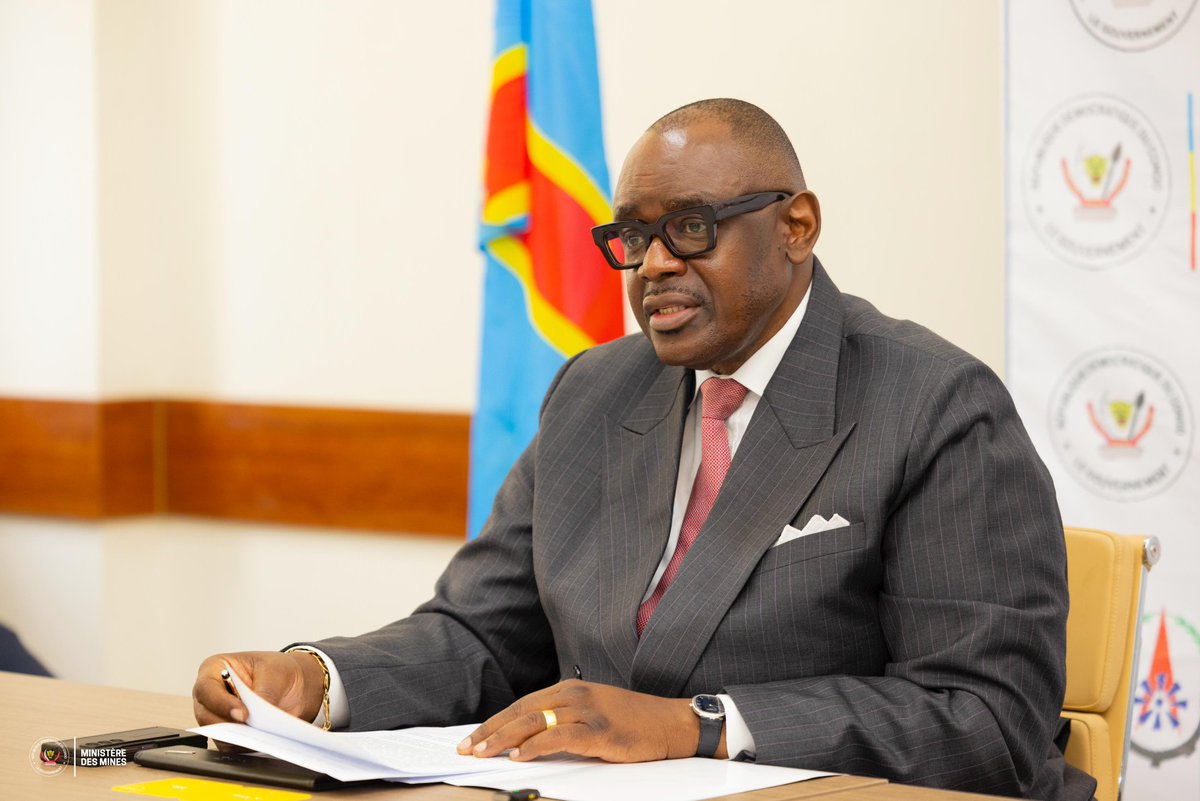
The Trump Administration has officially invited the President of the Democratic Republic of Congo, a strategic partner of the USA, to the White House in Washington, D.C., on Wednesday, February 4, 2026.
US Secretary of State Marco Rubio has just announced that the President of the Democratic Republic of Congo, Félix Tshisekedi, is expected at the US State Department, accompanied by the Minister of Mines, Louis Watum Kabamba, and the President of Gécamines, Guy-Robert Lukama, to participate in a very important international meeting on critical minerals.
Indeed, the Trump Administration will host an international meeting on critical minerals with numerous African countries on February 4, 2026.
The Trump Administration announced on January 20 that a summit on critical minerals will be held on February 4 at the US State Department in Washington, D.C.
The Minister of Mines as a Strategic Actor in the Emerging U.S.–DRC Critical Minerals Partnership
As global competition over critical minerals intensifies, the Democratic Republic of Congo (DRC) has emerged as one of the most strategically significant actors in the international minerals economy. Home to the world’s largest cobalt reserves, alongside substantial deposits of copper, lithium, manganese, iron ore, and rare earth elements, the DRC occupies a pivotal position in supply chains that underpin modern technology, the global energy transition, and national defence systems.
Recent policy developments in the United States—most notably President Donald J. Trump’s January 2026 proclamation directing negotiations to adjust imports of processed critical minerals and their derivative products (PCMDPs)—have further elevated the importance of structured partnerships with mineral-rich countries such as the DRC. Within this evolving geopolitical and economic framework, His Excellency Louis Watum Kabamba, Minister of Mines of the Democratic Republic of Congo, has emerged as a central institutional and diplomatic actor shaping the country’s engagement with the United States.
Crucially, this engagement extends beyond traditional battery minerals. Under the stewardship of the Ministry of Mines, the DRC has advanced large-scale, integrated projects aimed at diversifying its mineral portfolio and industrial base—most notably the Mines de Fer de la Grande Orientale (MIFOR) iron ore project, a proposed development with estimated initial investments of approximately USD 28.9 billion.
High-Level Engagement and Strategic Representation
The strategic importance of the Ministry of Mines is underscored by the Minister’s direct involvement in high-level bilateral engagement. On 4 February 2026, H.E. Louis Watum Kabamba will lead the DRC delegation to the U.S. Critical Minerals Partnership meeting at the United States Department of State, following a formal invitation from U.S. Secretary of State Marco Rubio.
This engagement marks a significant moment in U.S.–DRC relations. It elevates mineral cooperation from a primarily commercial dialogue to a strategic partnership addressed at the highest diplomatic levels. By personally leading the Congolese delegation, the Minister of Mines signals that critical minerals—including large-scale industrial projects such as MIFOR—are not merely extractive concerns, but core pillars of the DRC’s foreign policy, economic diplomacy, and national security strategy.
The meeting also reflects growing recognition in Washington that secure and resilient access to critical minerals requires stable, long-term partnerships with producing countries—partnerships grounded in state-to-state cooperation, regulatory alignment, and shared strategic interests.
MIFOR and the Industrial Dimension of Mineral Diplomacy
The MIFOR iron ore project exemplifies the shift in Congolese mineral policy under the Ministry of Mines from raw material exportation toward integrated, infrastructure-linked industrial development. Located in the northeastern part of the country, MIFOR is envisioned as a vertically integrated project encompassing iron ore extraction, rail and river transport infrastructure, and access to export corridors leading to deep-water ports.
With estimated resources measured in the tens of billions of tonnes and projected investments nearing USD 28.9 billion, MIFOR represents one of the most ambitious mining and infrastructure initiatives in the DRC’s history. Its scale positions it not only as an economic project, but as a strategic asset capable of reshaping national logistics, regional connectivity, and industrial capacity.
Under the authority of H.E. Louis Watum Kabamba, the Ministry of Mines has positioned MIFOR within a broader portfolio of strategic assets, signalling the DRC’s intention to attract long-term institutional partners capable of supporting projects that combine extraction, infrastructure development, and state-building objectives.
Critical Minerals, MIFOR, and Security in Eastern Democratic Republic of Congo
Beyond economic and industrial considerations, the U.S.–DRC partnership on critical minerals has important implications for security and stability, particularly in eastern regions of the country that have experienced prolonged insecurity and weak state presence.
Large-scale projects such as MIFOR illustrate how mineral governance, infrastructure development, and security are interlinked. By anchoring investment in formal, state-regulated frameworks, such initiatives can help extend government authority into historically marginalised regions, reduce reliance on informal and illicit mining economies, and support sustained state presence.
Ministerial Control and State Authority
The Ministry of Mines plays a decisive role in determining where and how strategic projects are developed. Through concession allocation, regulatory oversight, and coordination with other state institutions, the Minister of Mines ensures alignment with broader national priorities, including territorial consolidation and security considerations.
Infrastructure as a Stabilising Force
Projects of the scale envisaged under MIFOR necessitate transport corridors, energy infrastructure, and logistics networks. These investments contribute to state visibility and economic integration, reducing isolation and strengthening governance in regions historically vulnerable to instability.
From Informal Economies to Strategic Assets
By shifting focus from fragmented artisanal extraction toward large-scale, traceable, and regulated projects, the Ministry of Mines helps undercut the economic foundations of conflict financing. Increased transparency and formalisation weaken illicit networks while strengthening fiscal capacity and institutional governance.
Conclusion: Strategic Stewardship in a Defining Moment
The emerging U.S.–DRC critical minerals partnership reflects a broader transformation in how natural resources are understood in global affairs—not merely as commodities, but as strategic assets with far-reaching economic, diplomatic, and security implications.
Under the leadership of H.E. Louis Watum Kabamba, the Ministry of Mines has positioned itself at the centre of this transformation. By advancing flagship projects such as MIFOR, leading high-level engagements at the U.S. Department of State, and embedding mineral diplomacy within a wider vision of sovereignty and security, the Minister of Mines exemplifies a model of strategic stewardship aligned with long-term national interest.
If effectively implemented, the partnership between the United States and the Democratic Republic of Congo holds the potential not only to secure resilient global supply chains, but also to contribute meaningfully to stability and state consolidation—transforming mineral wealth from a historical source of vulnerability into a foundation for peace, development, and shared prosperity.
By Divine M. Mwenda
Managing Director, FKF Softpress
Acting Chief Editor, Mining News Magazine


